A lantern that meets its advertised runtime on the bench but fades after a monsoon month is usually a battery-design failure, not an LED failure. This paper sets out the selection and sizing route a battery OEM follows with a solar-lighting manufacturer: choose the chemistry on the criteria that field use rewards, convert light demand into a defensible energy budget, add the weather reserve, and match the nickel-metal hydride pack to a small photovoltaic panel, a simple charge manager and an occasional USB load.
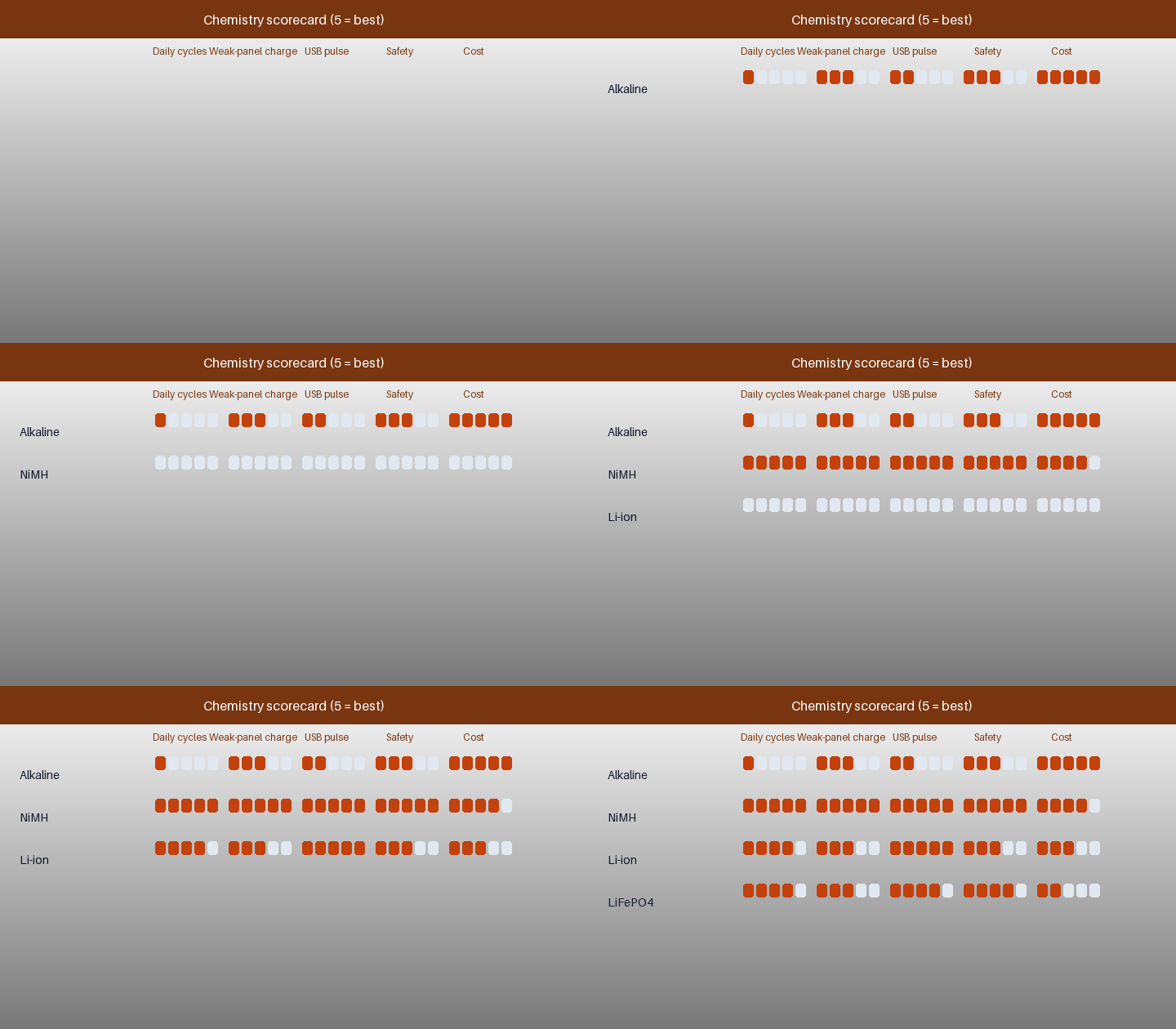
The animated scorecard compares five candidates on daily cycle life, safety in an unattended consumer enclosure, charge acceptance from a weak panel, high-rate USB pulse, low-temperature behaviour and cost. Primary alkaline is cheap to buy but is not designed for a thousand deep cycles and leaks risk in a long-life device; small sealed lead-acid is heavy and suffers deep-discharge damage; lithium-ion is light but needs a protection board and carries thermal risk in a low-cost enclosure; LiFePO4 is safer but still requires management and adds cost.
Sealed, low-self-discharge NiMH balances these: proven multi-hundred-cycle life under daily use, an inherently safe aqueous chemistry, simple charge management that suits a small panel and a cost-conscious bill of materials, and commodity AA/Sub-C/D form factors that make user replacement practical - a point humanitarian buyers explicitly require.
Begin from light, not from a battery catalogue. Multiply the brightness of each mode by its hours to obtain lumen-hours per mode and per night; convert to electrical watt-hours using the LED efficacy and driver efficiency; sum the modes for a typical night and add the expected USB phone-charge energy. Divide by nominal pack voltage to obtain the nightly Ah drawn from the cells.
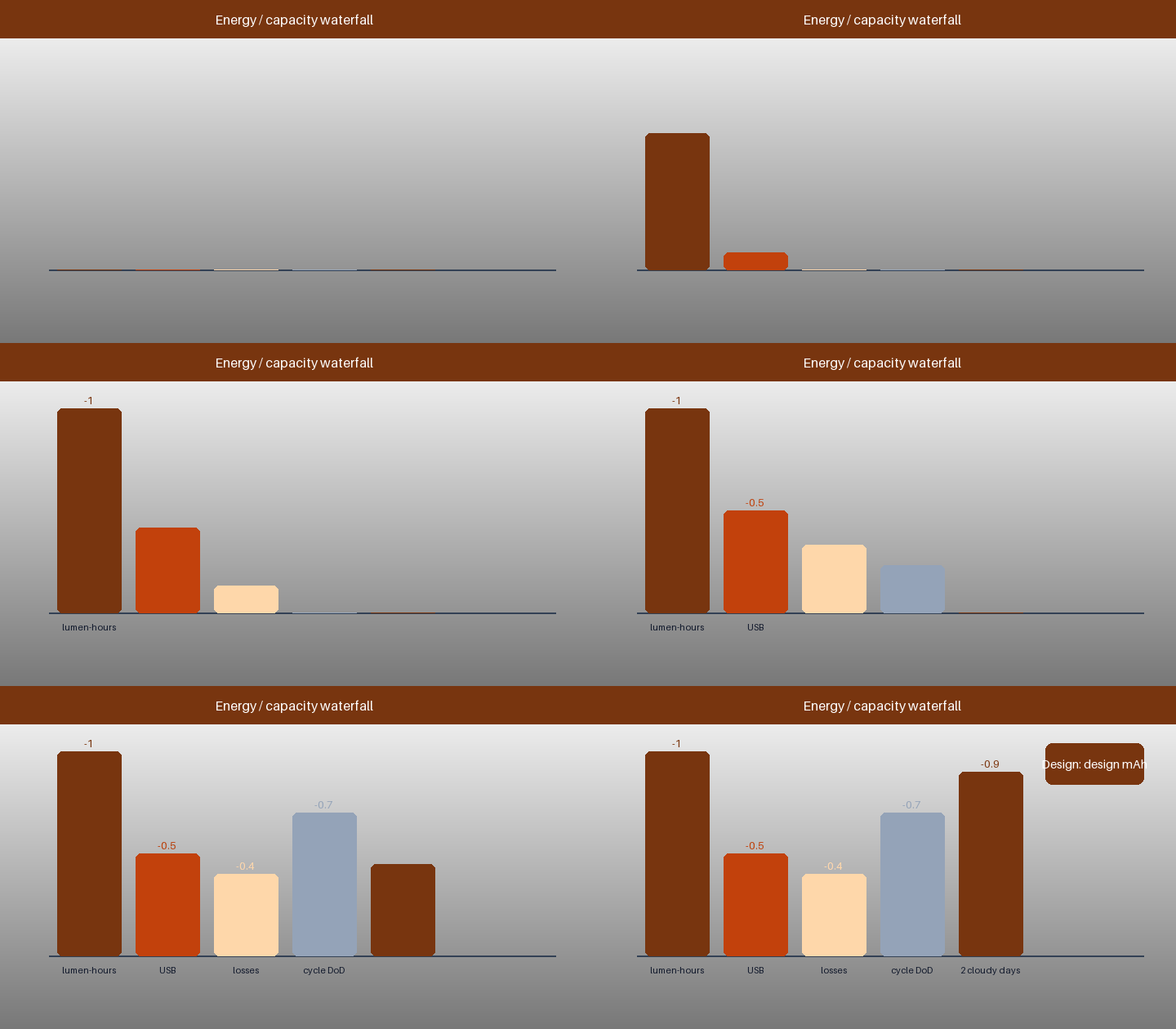
The second animated figure is the energy waterfall: nightly light energy, USB energy, driver and conversion losses, the depth-of-discharge ceiling that protects cycle life, an end-of-life capacity factor, and the cloudy-day autonomy reserve. As in every sizing waterfall in this series, each derating is shown explicitly so the resulting nameplate Ah is auditable rather than optimistic.
A battery cycled to 100% every night wears far faster than one kept to a moderate depth of discharge. Because the lantern cycles daily, the design should cap routine depth of discharge - commonly to 70-80% - and reserve the top-up for cloudy weather, which simultaneously buys cycle life and provides the weather margin. NiMH retains the majority of its capacity beyond the IEC 61951-2 reference of 500 cycles when not routinely flattened, a comfortable match for a multi-year consumer product.
Cell count follows from voltage: three or four NiMH cells give a 3.6-4.8 V nominal rail suited to a 5 V USB boost, while higher-count packs drive higher-voltage LED strings. Cell size follows from the Ah budget and the USB pulse current.
The panel must be able to refill the nightly draw, plus losses, inside the realistic daylight charge window at the deployment latitude - not at noon-equivalent irradiance. Sizing the panel for an average of four to five effective charge hours, rather than peak sun, prevents chronic under-charge in cloudy seasons. The charge manager should deliver a temperature-aware termination or a gentle trickle, because NiMH charged continuously above about 45 C will gas and lose water.
Low-self-discharge NiMH is forgiving of the resulting opportunistic, sometimes-incomplete charge pattern, and it retains charge on the shelf - important for emergency lanterns sold charged and stored until a blackout.
Select cells whose internal resistance stays low across life so a 1-2 A USB pulse does not drag the pack below the boost undervoltage threshold; weld the tabs and size the busbar for that pulse. For emergency use in cold climates, NiMH keeps working below freezing where lithium capacity and charge acceptance fall away, though charging below 0 C should still be limited.
Add a thermistor for charge temperature cut-back, a fuse, and a mechanical layout that vents any cell pressure away from the electronics. These are small additions that make the difference between a certified product and a field return.
For a lantern promising five hours high mode plus a long low tail and occasional phone top-up across two weak-charge days, the waterfall typically lands on a pack of several thousand mAh of NiMH rather than the smallest pack that lights one clear night. That deliberate oversizing for cycling and weather is what keeps the IEC 62257-9-5 runtime claim true in year two.
Paper C shows how to prove it: the IEC TS 62257-9-5 runtime and durability tests, lumen maintenance, ingress and drop tests, the cell safety and transport evidence, and an accelerated cycle-fade test that predicts field life.
Weijiang Power builds sealed nickel-metal hydride cells and custom rechargeable packs for home emergency lanterns, solar pico-lighting and preparedness products that must survive years of daily charge-discharge use. Share your lumen-hour target, brightness modes, solar-charge window, phone-charging requirement and temperature range and our engineers will size a cycle-robust, aqueous-safe NiMH pack with welded tabs and the connector your assembly needs. Review cell options and pack formats on the products page.


