The AA/AAA charger is the most numerous NiMH charge controller in the world and the one most users judge directly: it must accept mixed cells of different capacity and charge state, fill each correctly, never overheat a battery in an unattended overnight slot, and do all of it cheaply. Modern smart chargers achieve a two-to-four-hour fill through independent per-bay charge channels, each running its own -delta-V and thermal termination. This paper maps the architecture of a quality consumer charger, explains why independent channels matter, walks the per-cell control flow, contrasts the smart fast fill with legacy 0.1C timer chargers, and identifies the features - and marketing claims - that distinguish a genuinely cell-safe design.
Cells inserted together differ in capacity (800 to 2800 mAh AA), remaining charge, age and brand; a single series channel forces one current and one termination decision onto mismatched cells, reproducing the mismatch problems of Paper 29 on the desktop. Independent bays charge each cell on its own current path with its own voltage and temperature sensing, so each terminates on its own peak - a 2800 mAh cell can keep charging after a depleted-then-full 800 mAh AAA has stopped.
Independent channels also permit mixed sizes and mixed insertion times, per-cell fault detection (a shorted or reversed cell shuts only its bay), and per-cell refresh, which together define the flexibility users expect from a premium charger.
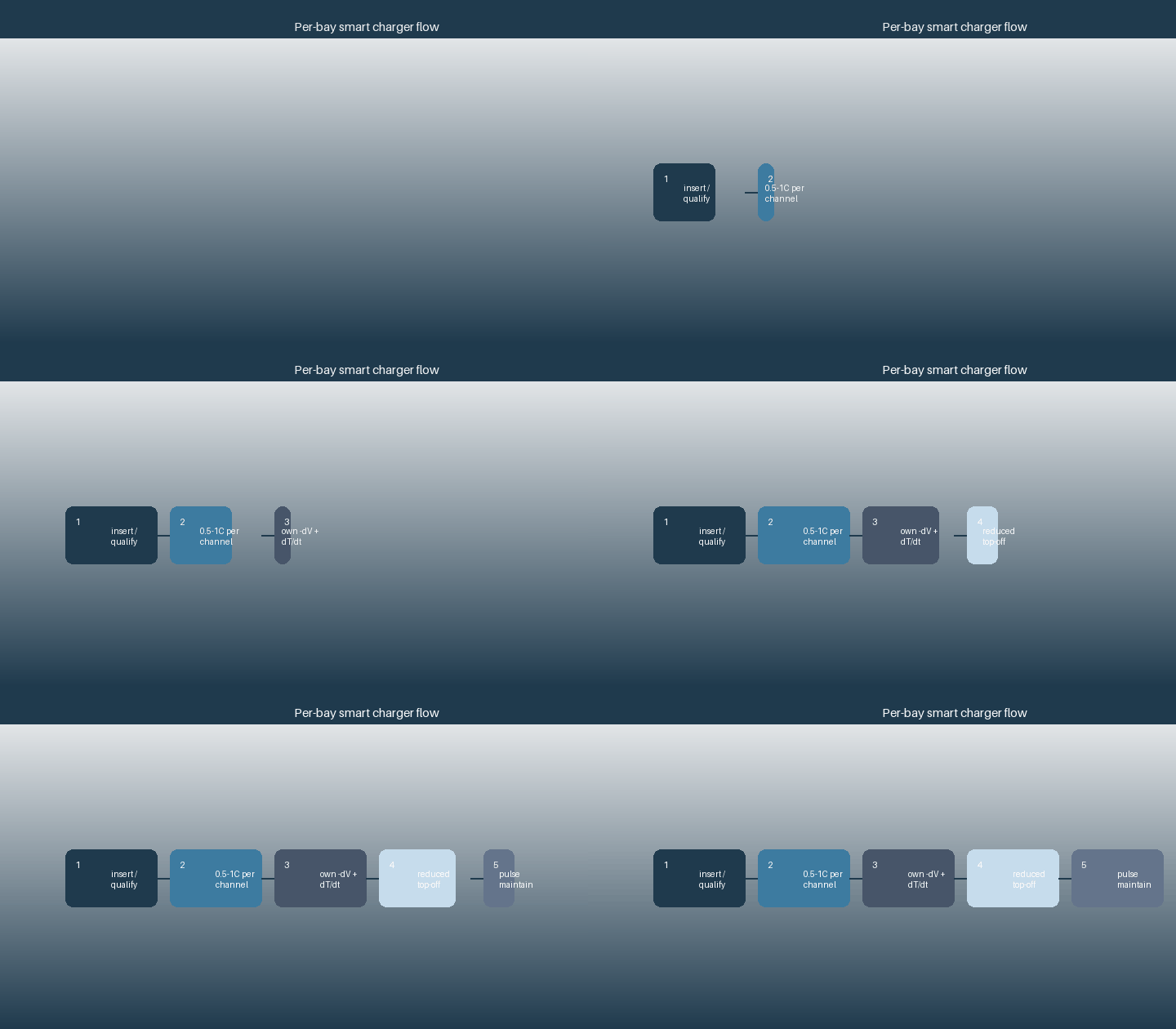
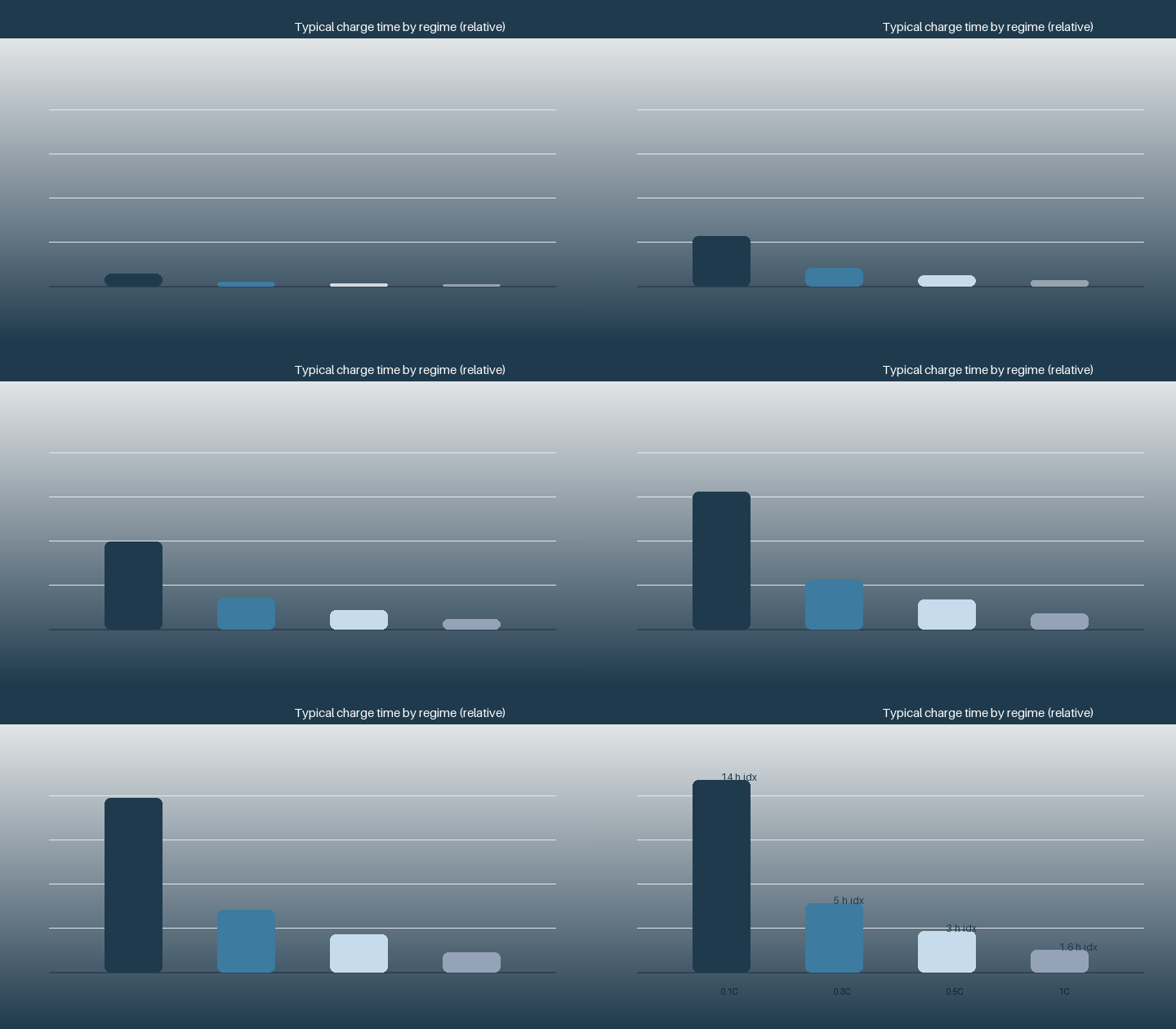
Each channel runs the full state machine of Paper 10: insertion and qualification (bad-cell detection from abnormal voltage), a fast constant-current phase at 0.5C to 1C sized to the bay, parallel -delta-V/dT/dt/absolute/timer termination, a short reduced-current top-off, and optional pulse maintenance once full. Modern designs complete a fill in roughly two to four hours - the current generation of NiMH smart chargers commonly cited in this range - versus fourteen-plus hours at legacy 0.1C.
Current is chosen as a compromise of speed, heat in a small enclosure and cell rating; quality chargers select current per cell size and reduce it when several hot bays are simultaneously charging, applying the hottest-cell governance of Paper 28 at desktop scale.
Consumer cost pressure drives clever sensing: a single MCU multiplexes current, voltage and NTC readings across bays; NTCs may be shared between adjacent cells with careful placement; and -delta-V algorithms are tuned to the ADC resolution and charging-current ripple achievable at the target bill of materials. The engineering challenge is preserving robust termination (Paper 6) despite cheap sensors - achieved through multi-sample confirmation, current-stable measurement windows and strong reliance on dT/dt and timers as backstops.
A genuinely safe budget charger keeps the absolute temperature and maximum-time backstops even where it economises on sensing; a charger that omits these to hit a price point is the failure mode behind overheated-battery incidents.
Analyser-class consumer chargers add controlled discharge/refresh to reverse voltage depression (Paper 22), capacity measurement, and break-in programs for new cells; these should be explicit, user-selected modes with per-cell cutoff rather than automatic deep cycling, and their discharge energy is either dissipated safely (with its own thermal budget) or, in advanced designs, switched to another bay. Clear display of charge, full and fault states prevents the 'is it still charging?' uncertainty that leads users to over-leave cells.
Claims of 'reviving dead batteries' should be understood as reconditioning reversible depression, not repairing aged cells - a distinction Paper 22 draws and honest product messaging should preserve.
The life evidence (Paper 24) favours slower charging, so a well-designed charger offers a selectable slow/gentle mode for cells that will be charged overnight and reserves fast mode for when speed matters, rather than defaulting every cell to 1C. Low-self-discharge cells also need little maintenance current, so 'ready' bays should use light pulse maintenance rather than continuous trickle (Paper 9). The first figure diagrams independent-bay architecture; the second sequences the per-bay charge timeline from insertion to ready.
Usability features - mixed capacity support, per-bay indicators, overheat shutdown, bad-cell rejection, a gentle-mode option - are simultaneously safety features, because unattended consumer charging removes any human backstop.
Weijiang's AA/AAA grades carry specified maximum fast-charge currents, peak and thermal characteristics that let charger designers set per-size currents and termination thresholds from real data, and LSD grades whose low self-discharge suits light maintenance. The next application turns to a setting where charge current is not controlled at all by a grid - solar and off-grid NiMH charging.
Weijiang Power designs and manufactures nickel-metal hydride cells, matched packs and charging-ready configurations for consumer, industrial, medical and mobility customers, and supports partners with charge-protocol guidance, IEC 61951-2 performance files, IEC 62133-1 safety evidence and charger co-validation. Share your cell format, charge rate, thermal envelope and cycle target and our engineers will specify a cell-and-charge combination that protects both runtime and service life. Review the range on the products page.


